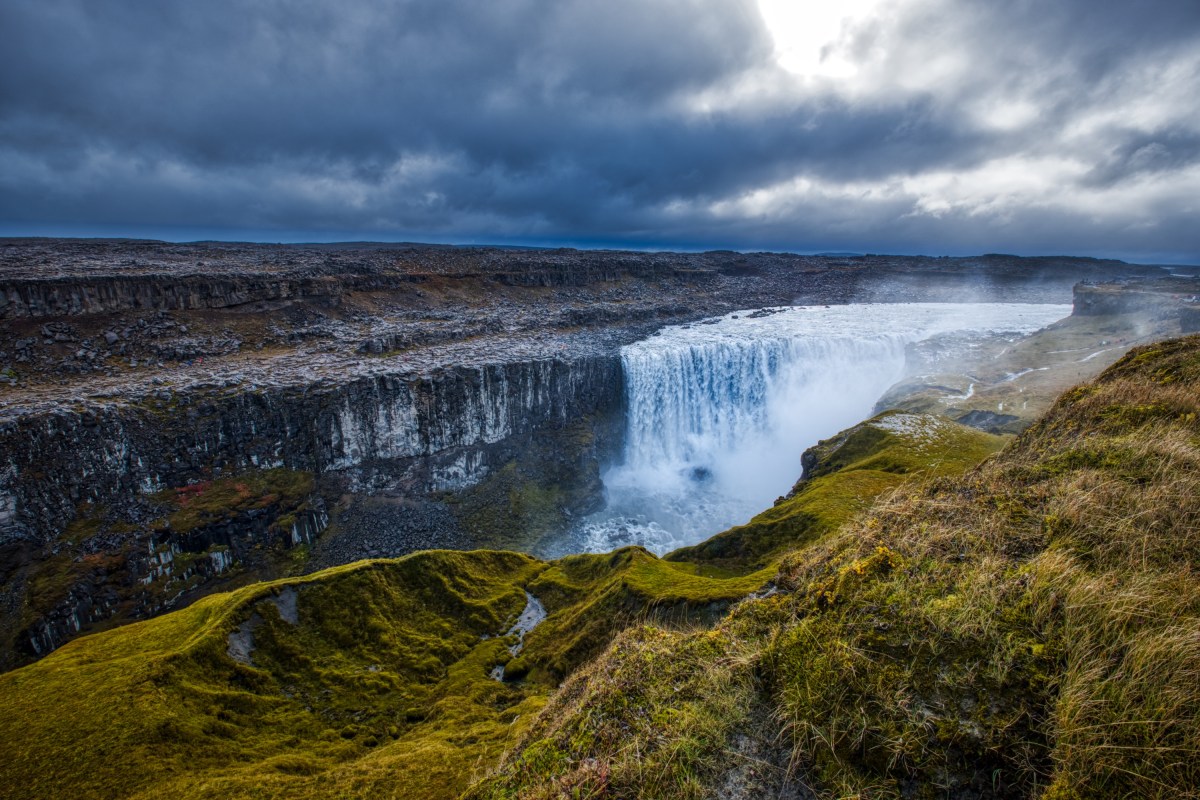
We unloaded the minibus to 30-50 mph wind gust hammering rain sideways into our faces, and as we tromped a couple kilometers through a flat lava debris field, we could hear mighty Dettifoss of northeast Iceland, said by Icelanders to be the most powerful waterfall in Europe. A waterfall that incidentally had a notable cameo in the opening of the movie Prometheus as the Engineer swallowed some bad alien juju that ate him from the inside out standing over Detti’s waters. The water was roaring beneath the gloomy canopy of clouds, and I took some super telephoto shots of people who made the trek down slippery rocks to get sheeted by the falls down on the cliff closest to them ; I chose to go the high-looking-down route. Wunnerful watery stuff, people. Get to Iceland.
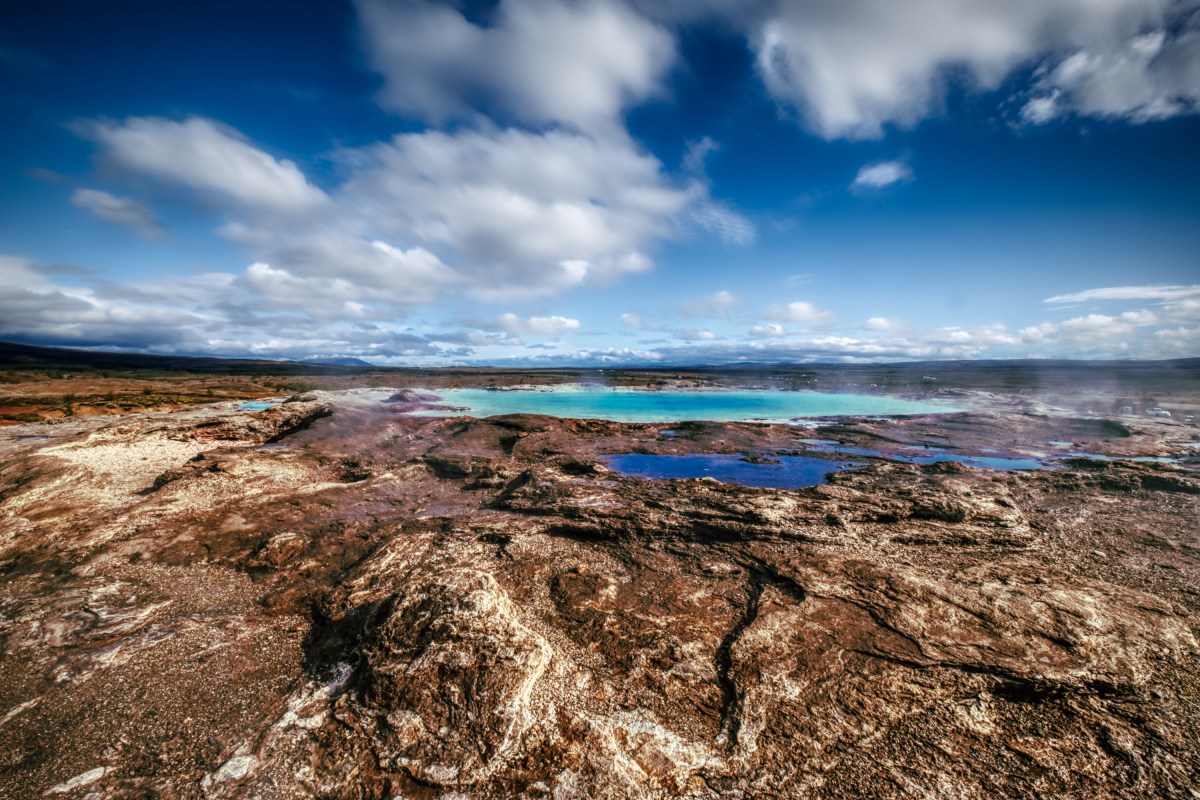
The third pillar of Iceland’s Golden Circle is Geysir, pronounced “geezer”, for those who care about old cranky dudes, which apparently the old Norse do. Although the major geysers were spouting off every 8-14 minutes, it was the littler pools that were far more interesting to me. These quietly bubbling, steaming beautiful aquamarine ponds were liquid glass situated above craggy red rocks and reeking of sulfur. You could see all the way into the jagged crevices that fed them. The landscape behind them was vast, and we had an hour of sun and dramatic clouds floating over for good images. Lovely stuff.
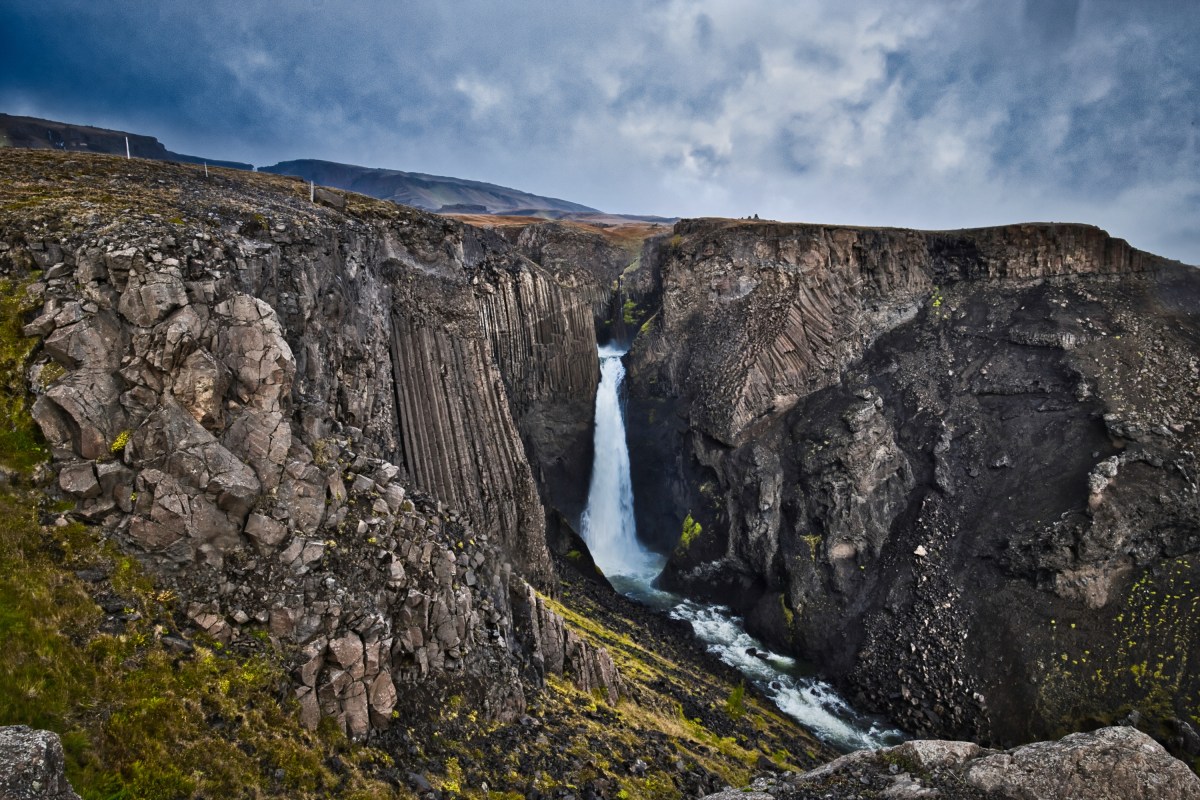
Litlanesfoss is oft overlooked by tourists intent on hiking 3km up to the mighty Hengifoss at the top, but it shouldn’t really, what all with those mighty basalt columns framing the lower waterfall. Honestly, they kinda look like blue whale baleen to me, but I’ve been accused of having a hyperactive imagination. Anyhow, the weather poured random rain on us, so getting a snap of this l’il guy was an exercise in cover-wipe-shoot-wipe again.
“I’m number 3, Mom!” So says Hengifoss with not a little irony, lauding herself for being the 3rd highest waterfall in Iceland, located in the northeast interior. Do waterfalls have an identifiable gender? The parking lot was overloaded, and our guide Biggi said he was surprised there were this many tourists this far east. We had 60 minutes, so I hauled ass out of the minibus and sprinted up the trail, hauling up the 25 lb camera bag slung over my back, using my three legged tripod as a proxy hiking stick. Crossed somewhat treacherous algae strewn slippy rocks over a creek, slogged through mud, waited for an Argentinian tour group to clear the field of view, snapped a photo. Well….a helluva lotta photos, tbh. The view didn’t suck.
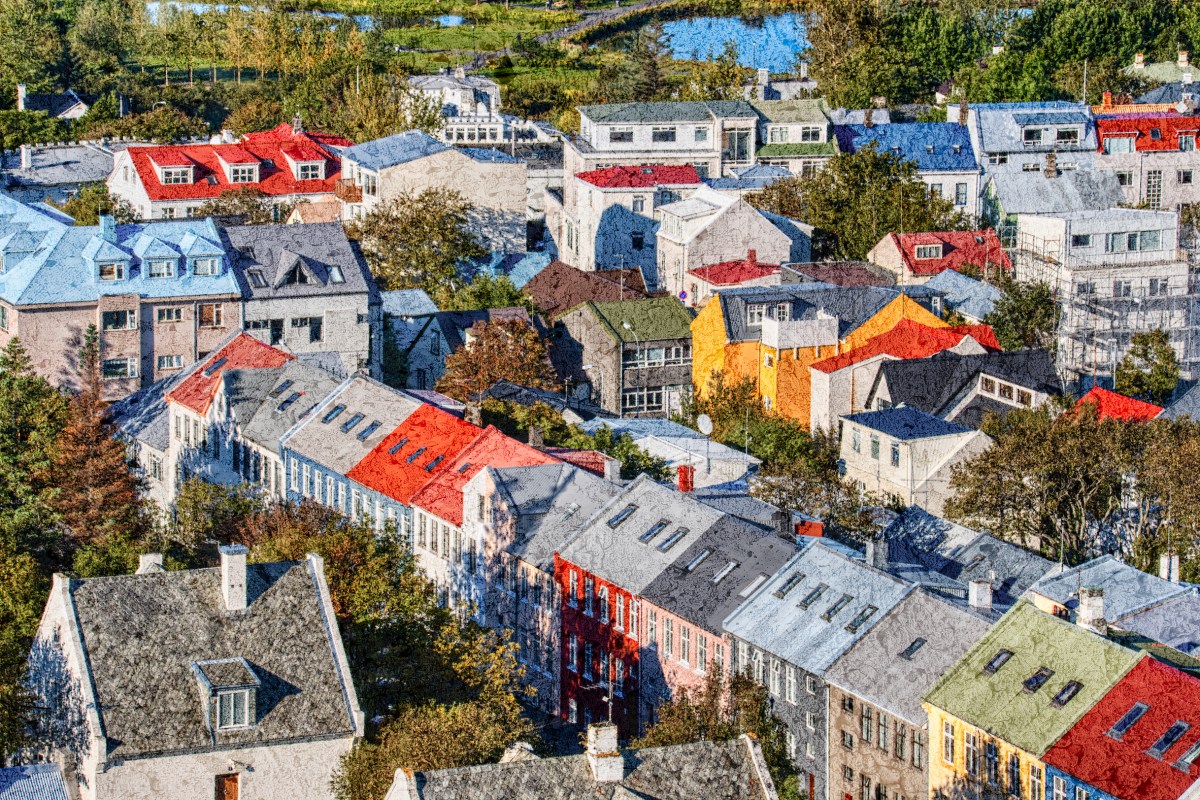
The Icelandic language is the closest Nordic language to the old Norse of the Viking, as the other Scandinavian countries have customized it to nigh unrecognizable. Fine. We elevate and climb to the top of the unpronounceable church Hallgrímskirkja, we look out on the houses of Reyjkavik, the capital city that holds two thirds of Iceland’s entire population. I pull out the kind of gigantic lens that makes everyone in the church tower raise their eyebrows, jab it through the narrow slot between stone columns, and I flatten the vivid colored houses that I can only assume the Icelanders paint to brighten spirits in lengthy winters with 4 hours of daylight. Mission accomplished.
Some two years after staggering through the Scotland wilds, the girl and I went northward to the land of volcanic fire and glacial calm. Thus begins the Iceland photo journey, and in Sept 2018, we–like many of the 2MM annual tourists visiting a country of roughly 300K folks–went to the Blue Lagoon. We paid the pretty penny to wade languidly around geothermal plant wastewater and cover our faces in a pleasant silica mud, and by God, we enjoyed the classy experience of it all. TIP: Go early near opening time, and you avoid the hordes that eventually swarm the place.
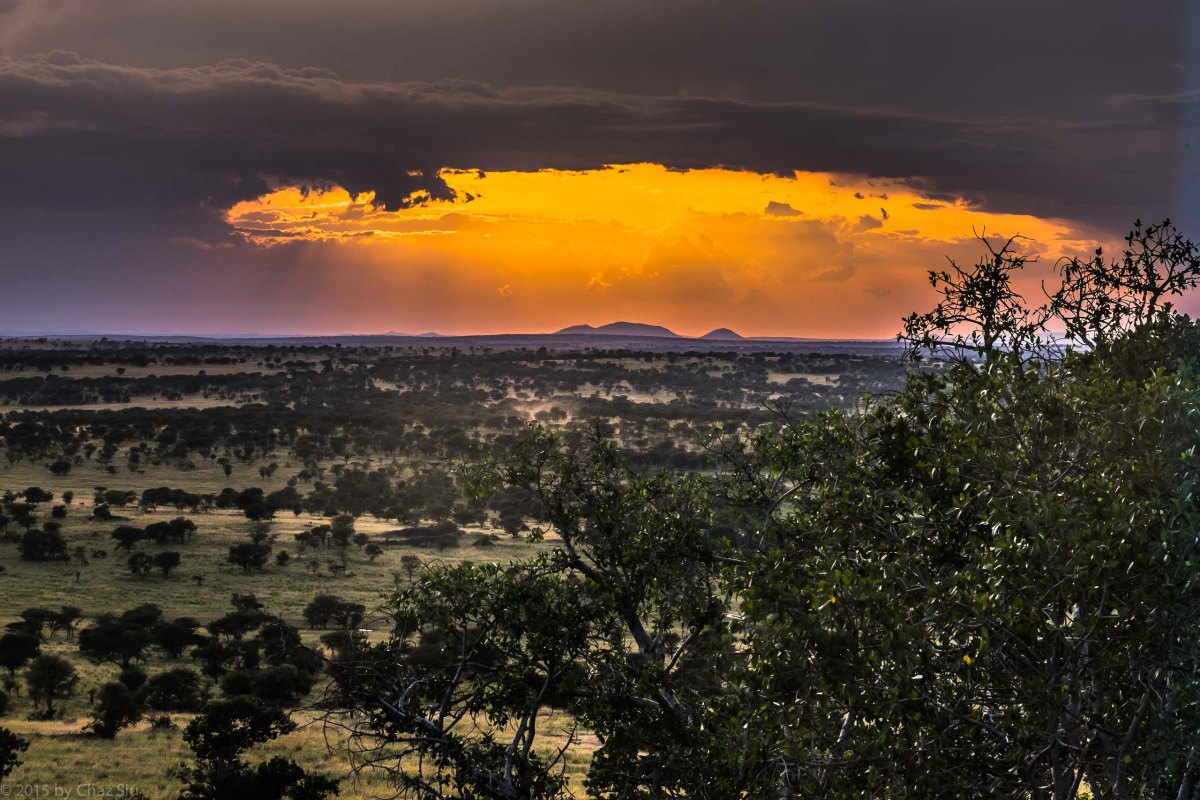
Lobo Lodge was located deep in northern Serengeti, isolated, gorgeous, and completely unoccupied except our group of four and the staff that outnumbered us. But boy oh boy were the views lovely in every direction. As the sun set, we saw the giraffes and elephants amble to the shadows and set down at night. Later on, as we enjoyed cocktails at the outdoor bar by the pool, hyenas yipped and barked. Not a bad evening to go to sleep to.
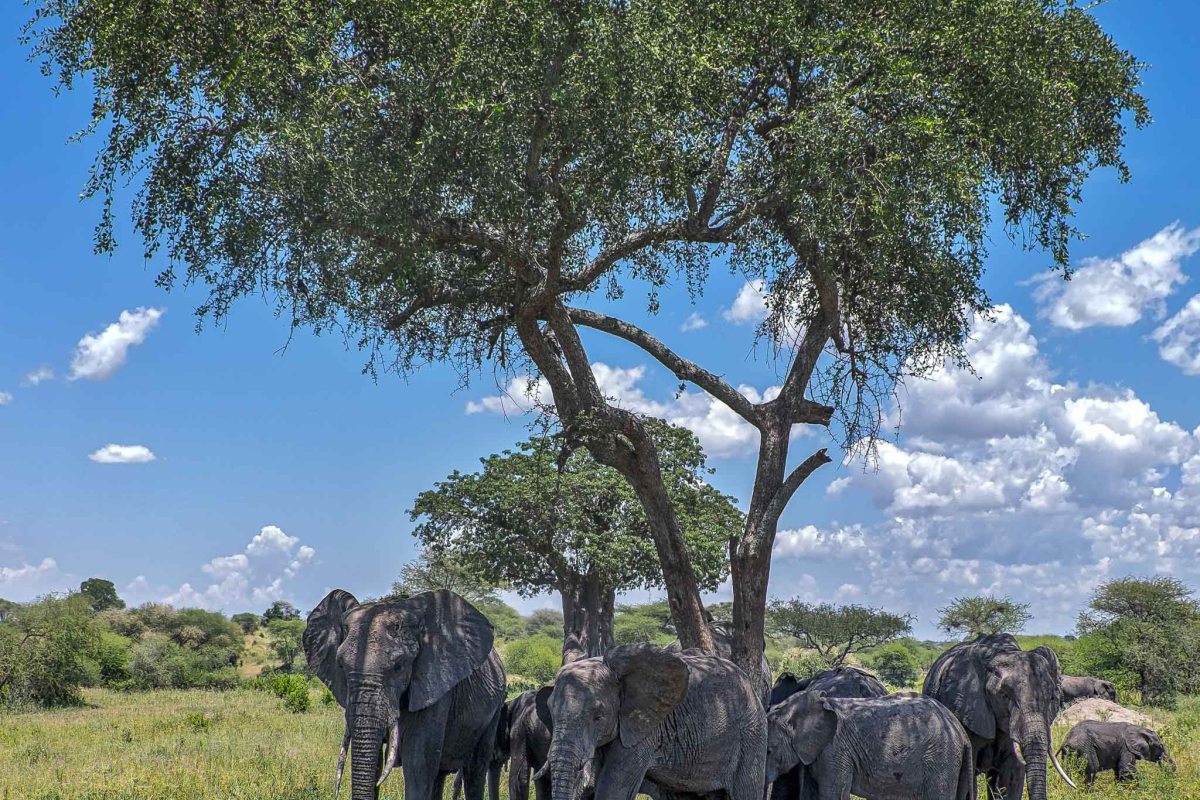
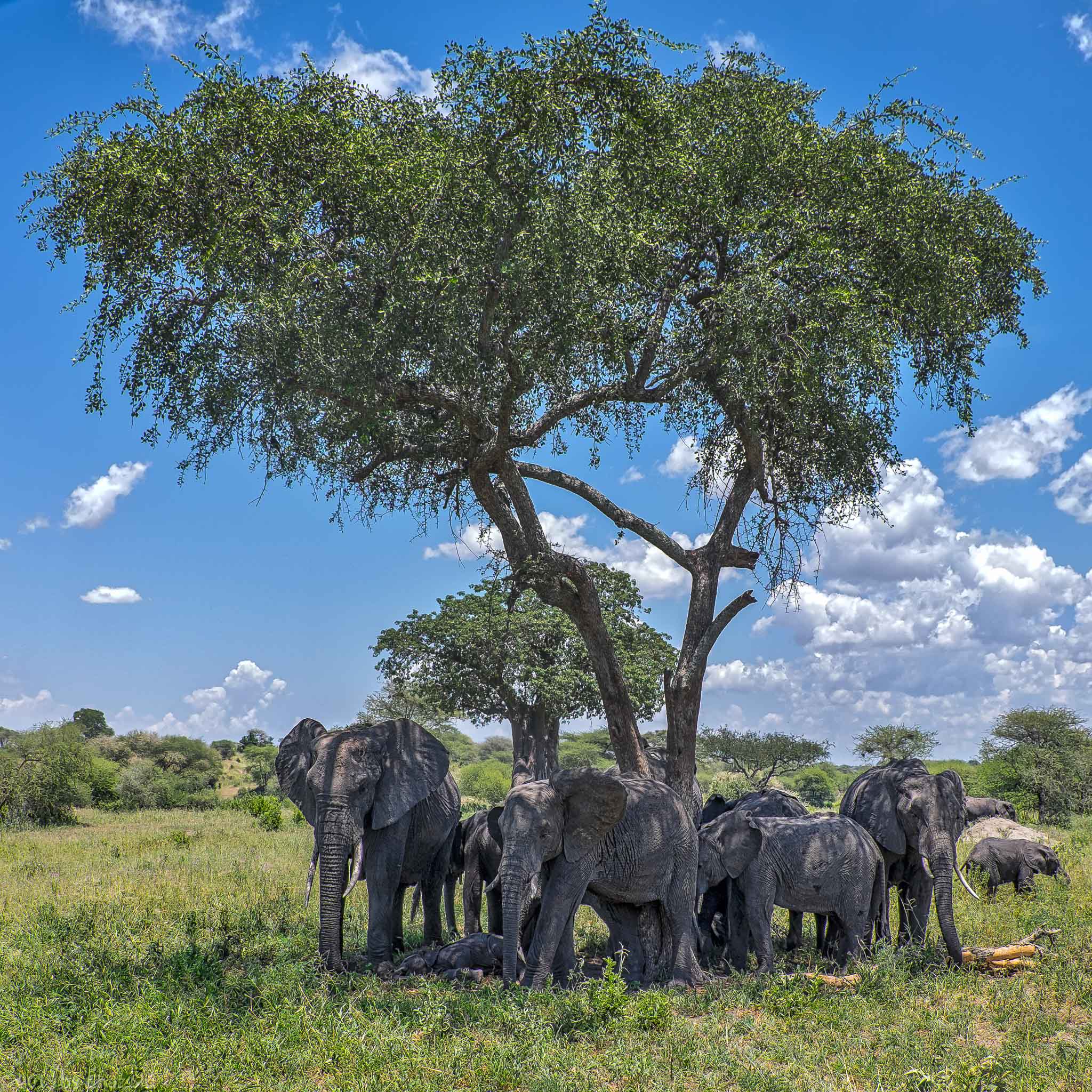
Elephant Cluster On A Hot Day and Baby Sleeping Under Mom
Tanzania is a nation of 40% national park, all of whom contain some elephants, but the Tarangire National Park is home to the majority of them, some 5000 elephants, 1000 of whom have been photo Id’d by the park service. On a warm and dry sunny day, we watched this group of elephants cluster under the great tree for shade. Note that baby is passed out sleeping on the ground beneath his parents to the left. Heavenly, peaceful, and content.
This is a photo blog series about my February 2015 trip to Tanzania, Africa to climb Mt Kilimanjaro and go on Safari in western Tanzania. I’ll take you day by day through the trip, written after the fact because, after hauling a small army of electronics with me–a tablet, iPhone, GPS, PS Vita, everything short of an actual laptop–it turns out that Tanzanian internet is pretty feeble, still cable connected, and the country is largely all about cell service, dashing my dreams of any reliable real time WiFi blogging. Lesson 1 learned.
DAY 1 HIGHLIGHTS
After having dealt with a last minute lost passport in San Francisco that delayed my flight by one day, I arrived the night of Feb 11 in Kilimanjaro Airport (JRO) to find my main and only bag of camping gear delayed or lost back in the US (thanks, Delta!), meaning I had only a pair of pants, the shirt on my back and a goofy grin–“I’m in Africa!” to start the hike. Guess we’ll figure it out, since this is unlikely to be the first time this has happened.
Iboru Safari LodgeIboru Safari Lodge Huts
An hour and half drive from the airport, then a quarter mile up a dirt road fully worthy of a four-wheeler, I enter a gated compound for Iboru Safari Lodge, an oasis of thatch roof huts and mosquito net beds. I crash, and in the morning, my friends Caryl, Alex and his wife Irina are waiting at breakfast.
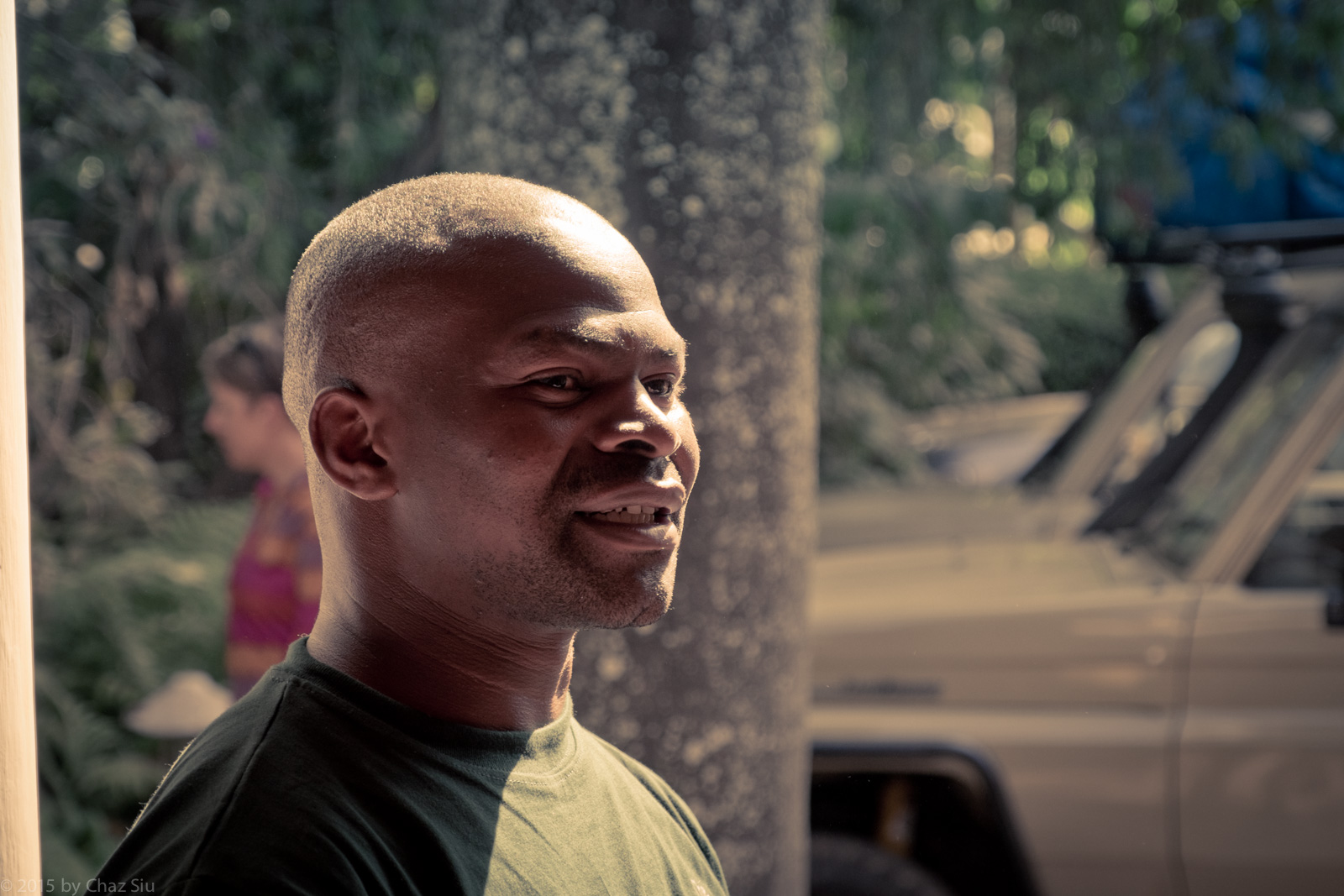
JT, Chief Guide For Kilimanjaro
Our lead guide, Justin Thomas (JT), of the African Walking Company, briefs us on the 9 day climb up the mountain, and makes arrangements (paid for by me..but I’ll file insurance) to have a porter haul the missing bag up the mountain to wherever we happen to be and in the meantime, I’ll use rental gear to make up anything missing. JT is a sunny, articulate fellow who’s got great social skills and has guided clients up the mountain since 2004.
There are four additional summiteers joining us on our journey: Kitt and her husband Rhys, US Marines currently posted in Senegal, Cort, a cybersecurity specialist from St Louis, and Paul, whom we call Buddha, an animator from the Carolinas.
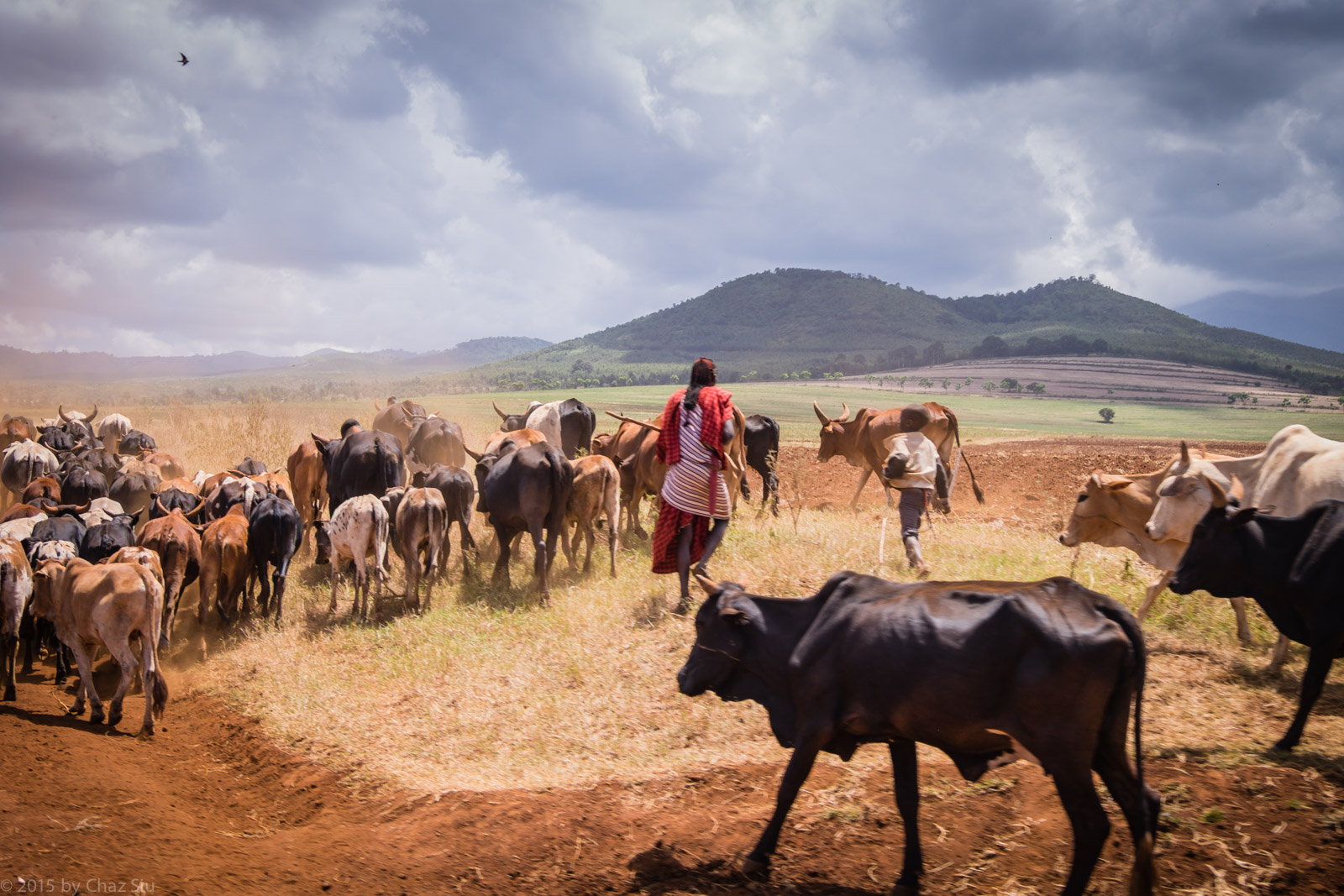
Maasai Herding Cattle On The Drive to Kili
We drive 2.5 hrs ascending from dusty dry plains past an assortment of tin roof shack, half finished brick houses, vibrantly dressed locals and Maasai herding cattle, up into the lush green forested foothills to the Londorossi Gate, where we register for the trip. Then it’s another 30 minutes down twisting dirt roads to the Lemosho Gate, our starting point. We’re doing the newest route on the mountain, the Northern Circuit, which is a combination of routes from the wet side of the mountain–Lemosho, Shira, Rongai, plus its own stops.
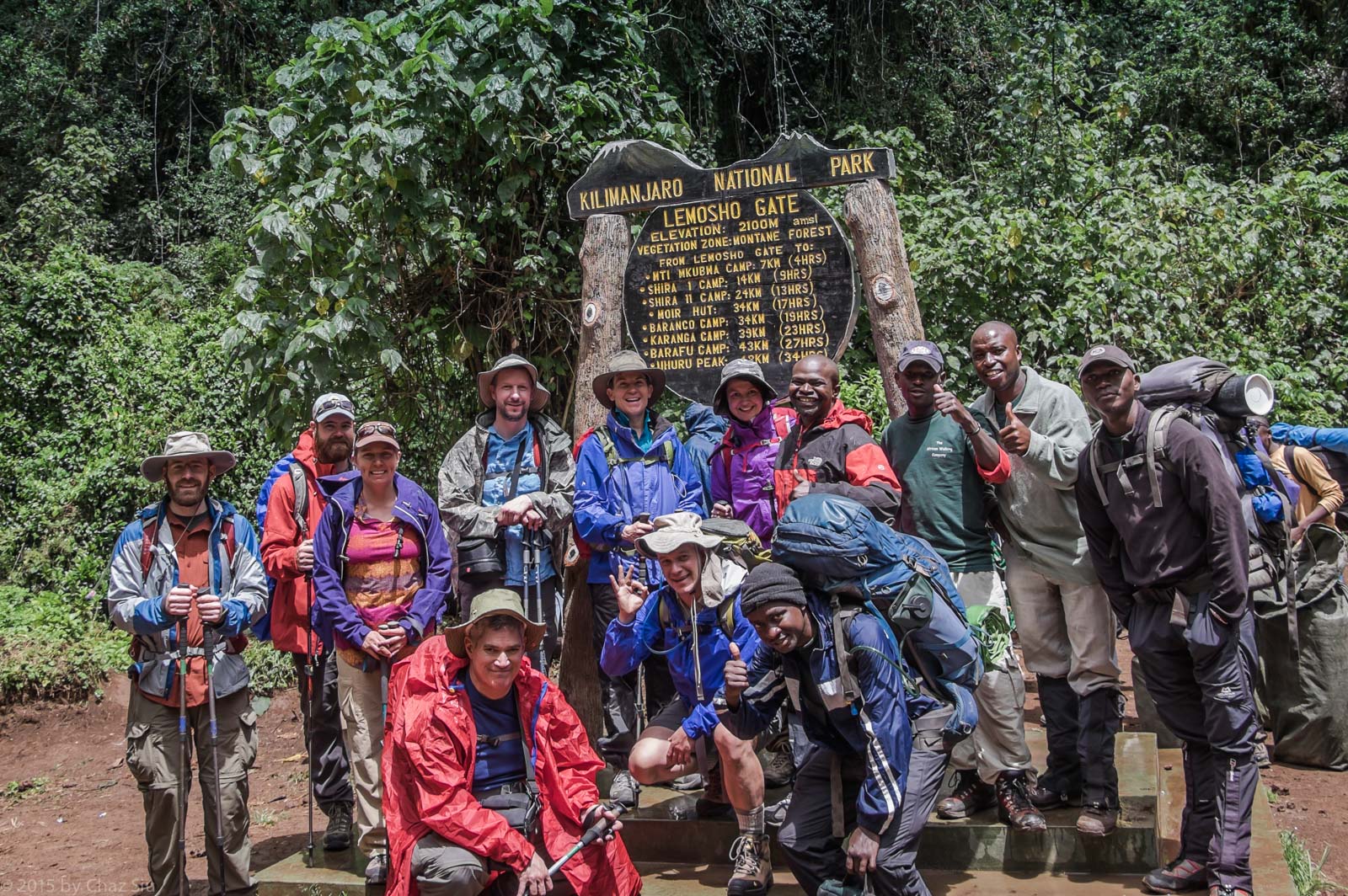
Lemosho Gate Start: Left to Right, Paul, Rhys, Kitt, Me, Cort, Caryl, Alex, Irina, Halid, JT, Chef Joseph, Viviano, Said
At Lemosho Gate, we first see the army assembled to help and guide us up the mountain: lead guide JT, Assistant Guides Said, Halid, Viviano, Chief Stomach Engineer (Chef) Joseph, 6 helping porters who carry our luggage, and a whopping 28 regular porters who carry mess tent, cooking tent, mobile toilet and tent, all food and water. The fellow with the AK-47 on his back is reassuring…wait, what?
Ascending Pole Pole To Tree Camp
We start at last! It’s raining steadily and after donning rain gear, we first learn the meaning of the Swahili word “Pole Pole” – “Slowly”…as we take one achingly slow step after another behind lead guide Said with Viviano and JT following up the rear– enough so that it’s actually calf work to move that slow, ascending up through the plush green jungle to Tree Camp. One the way, the army of porters ascends past us, luggage precariously balanced on their heads, backpacks on, rock and rolling ahead to get the camp setup by the time we arrive
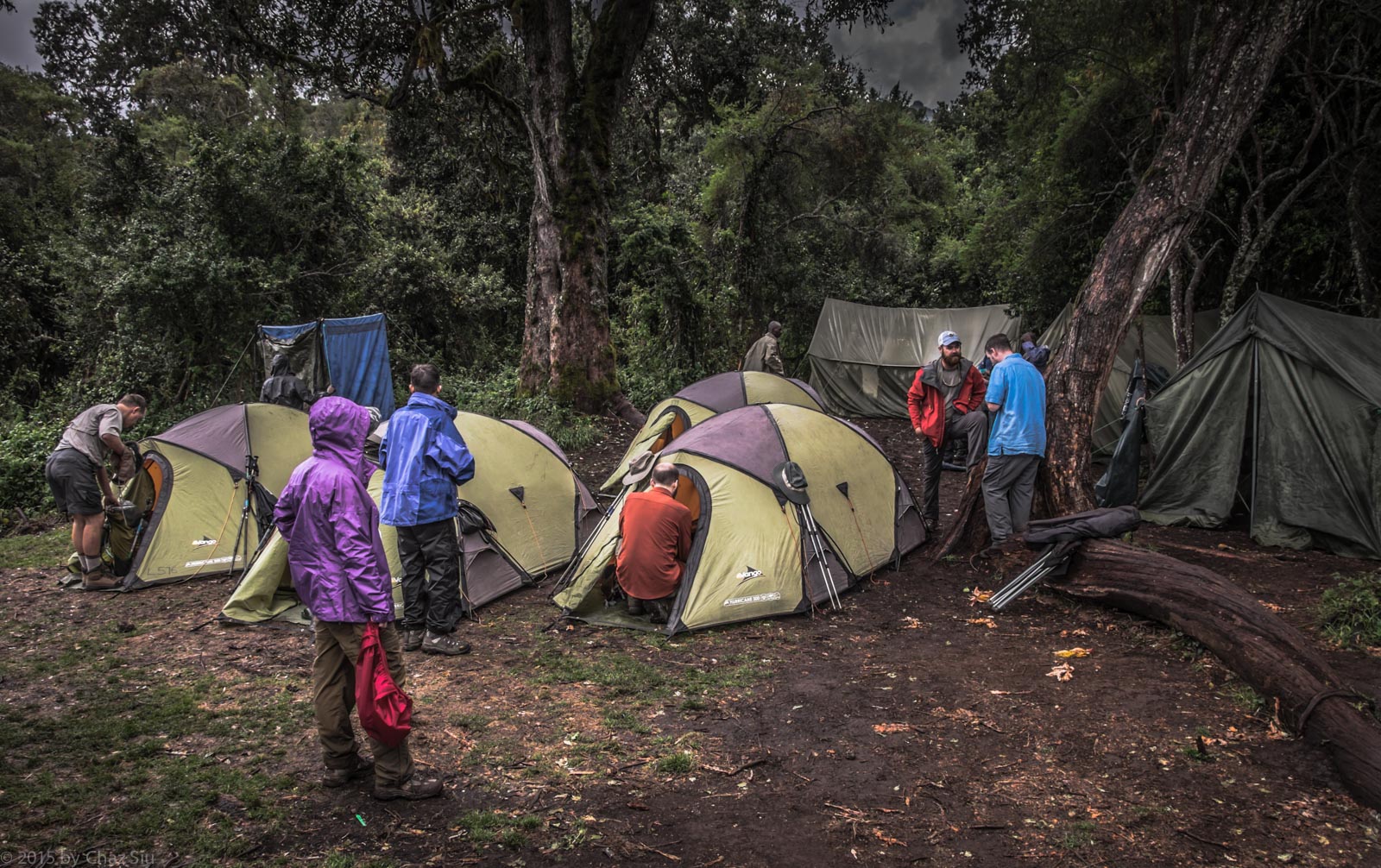
Lemosho Forest Camp
Roughly 2 hrs and a 1000 feet later, we come into Lemosho Forest Camp, elevation 8700 feet, where we find our tents setup, along with the mess and cooking tents. JT then briefs us about the small blue tent he calls the Internet Cafe (pronounced with the long A), where we can send email, and do all manners of Internet activity. He’s referring to the mobile toilet, of course, but this will become our staple sense of humor for the duration of the trip, approaching the tent in the middle of the night and asking “Cafe in use?”
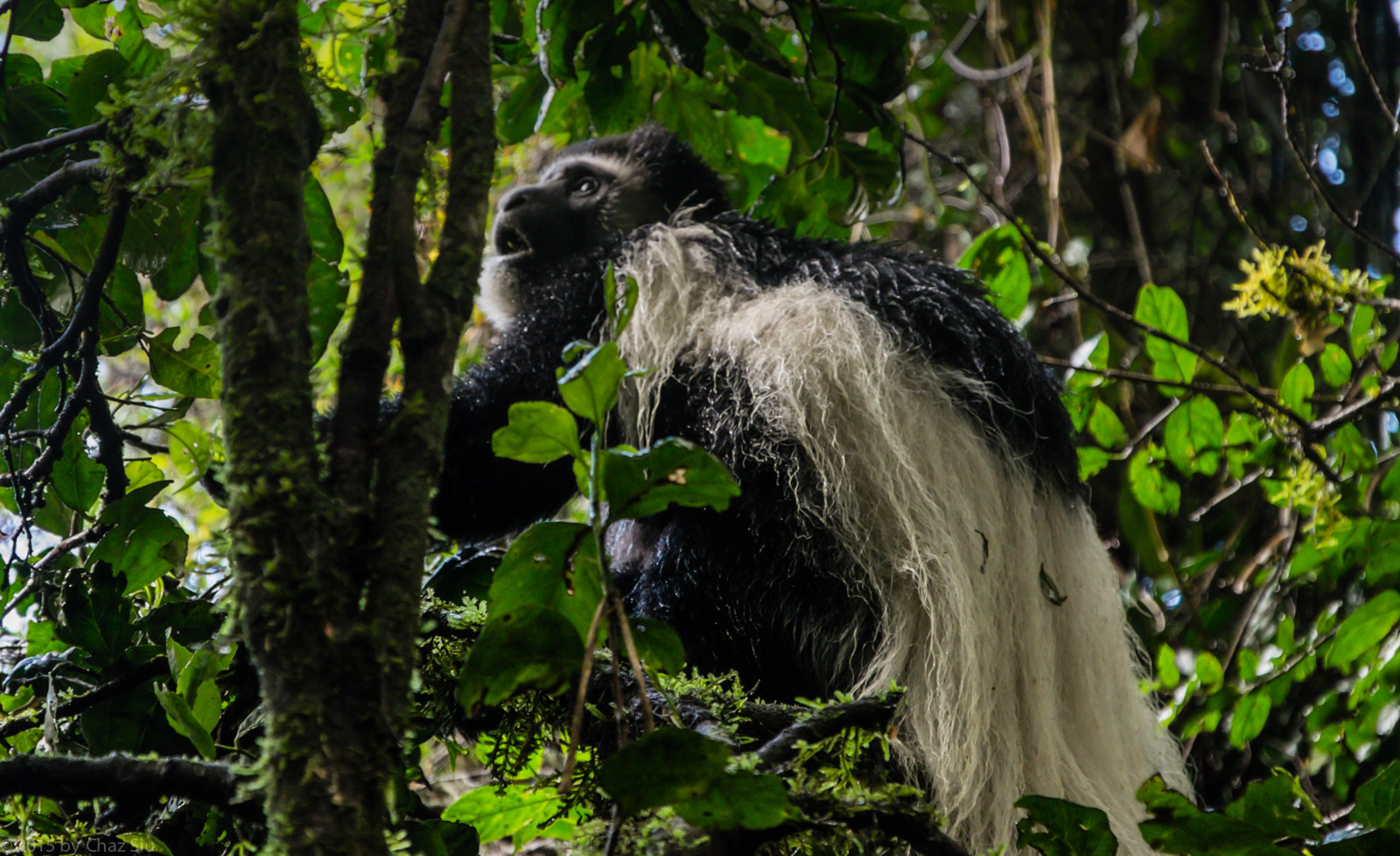
Black and White Colobus Monkey At Tree Camp
Along the rim of the camp, we can see and hear the clatter of monkeys; with long 3 foot tails of flowing black and white, it’s the black and white colobus monkey; we rush into the trees to capture pictures. Later at night, we’ll hear the staccato chatter of an alpha, and the call and response all around us as well.
Star Filled Night
After dinner, JT briefs us on the hike next day Eventually, we drift off to sleep in the rainforest to a star filled night and the chirps of forest birds, a full and fulfilling day behind us, and more adventure to come.
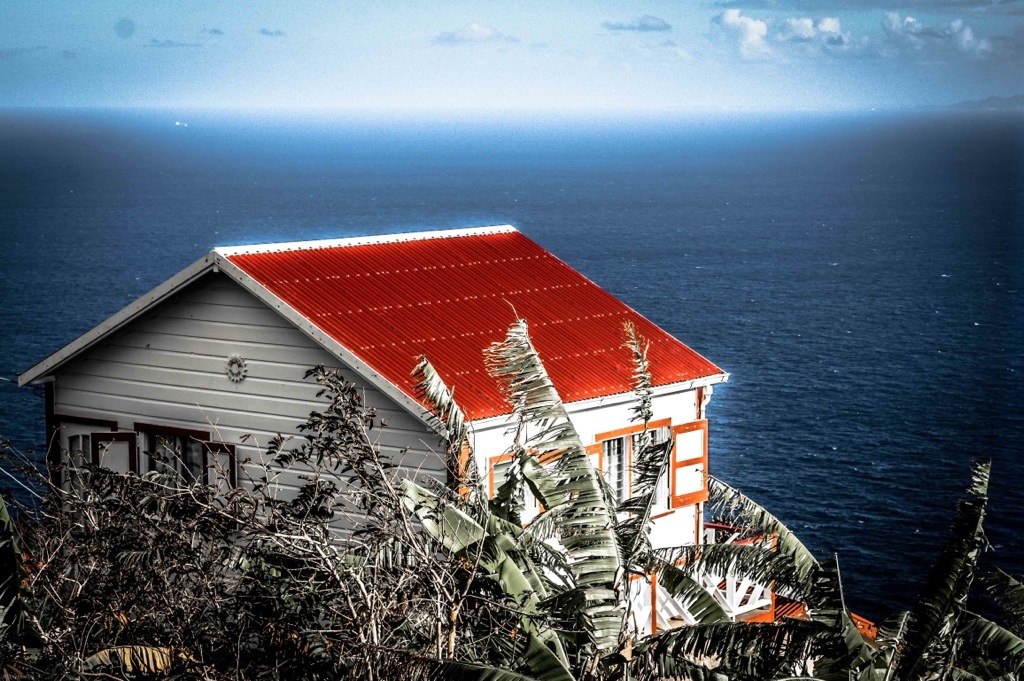
I visited Tricia down in Lower Hell’s Gate and came upon this little house perched quietly on the cliff, fronted by a messy tangle of foliage above the great Caribbean expanse, looking out on a bright, almost nuclear-lit horizon in the wake of good storm, with Statia presiding in the right upper corner. It’s interesting to me how our visual brain discards all the noisy information it sees in a scene like this when you’re looking at it, and all that cluttery detail reappears when you look at what the camera’s eye saw. Post processing for me is really painting the picture as close as I can to what I see in my mind’s eye when I take it. Some purist photographers disregard these processing techniques, but in the end, it’s all about aesthetics to me; you like an image or don’t, for reasons you may or may not understand, or it gives you pause to examine its detail, or you turn the page or click onwards…







 A Tangled Mind In Motion